
43 lines
2.4 KiB
Markdown
43 lines
2.4 KiB
Markdown
- Test Content
|
||
- | **AZ-900 Domain Area** | **Weight** |
|
||
| ---- | ---- | ---- |
|
||
| Describe cloud concepts | 25-30% |
|
||
| Describe Azure architecture and services | 35-40% |
|
||
| Describe Azure management and governance | 30-35% |
|
||
- ### Introduction to cloud computing
|
||
- Define cloud computing.
|
||
- Compute Power
|
||
- Storage
|
||
- Pay only ressources you use
|
||
- Upkeep is done by cloud provider
|
||
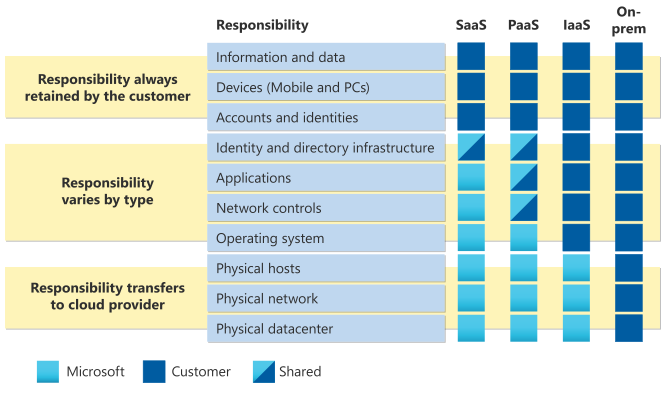
- Describe the shared responsibility model.
|
||
- Cloud Provider: Physical security, power, cooling, and network connectivity are the responsibility
|
||
- Consumer: responsible for the data and information stored in the cloud.
|
||
- IAAS (Infrastructure)-> PAAS (Platform) -> SAAS (Software)
|
||
- {:height 231, :width 700}
|
||
- Define cloud models, including public, private, and hybrid.
|
||
- | **Public cloud** | **Private cloud** | **Hybrid cloud** |
|
||
| ---- | ---- | ---- |
|
||
| No capital expenditures to scale up | Organizations have complete control over resources and security | Provides the most flexibility |
|
||
| Applications can be quickly provisioned and deprovisioned | Data is not collocated with other organizations’ data | Organizations determine where to run their applications |
|
||
| Organizations pay only for what they use | Hardware must be purchased for startup and maintenance | Organizations control security, compliance, or legal requirements |
|
||
| Organizations don’t have complete control over resources and security | Organizations are responsible for hardware maintenance and updates | |
|
||
- Azure ARC
|
||
- Manage Cloud environment
|
||
- Identify appropriate use cases for each cloud model.
|
||
- Describe the consumption-based model.
|
||
- Capital expenditure (CapEx)
|
||
- upfront one time expenditure
|
||
- Operational expenditure (OpEx)
|
||
- spending money on services or products over time
|
||
- Cloud computing is here
|
||
- Compare cloud pricing models.
|
||
- pay-as-you-go pricing model
|
||
- ### Describe the benefits of using cloud services
|
||
- Describe the benefits of high availability and scalability in the cloud.
|
||
- uptime (or availability)
|
||
- demand (or scale)
|
||
- each Service has own SLA
|
||
- Describe the benefits of reliability and predictability in the cloud.
|
||
- Describe the benefits of security and governance in the cloud.
|
||
- Describe the benefits of manageability in the cloud. |